
Is Scuba Diving Safe for Kids? PADI Junior Certifications Explained
Bill Merritt Jan 27, 2026
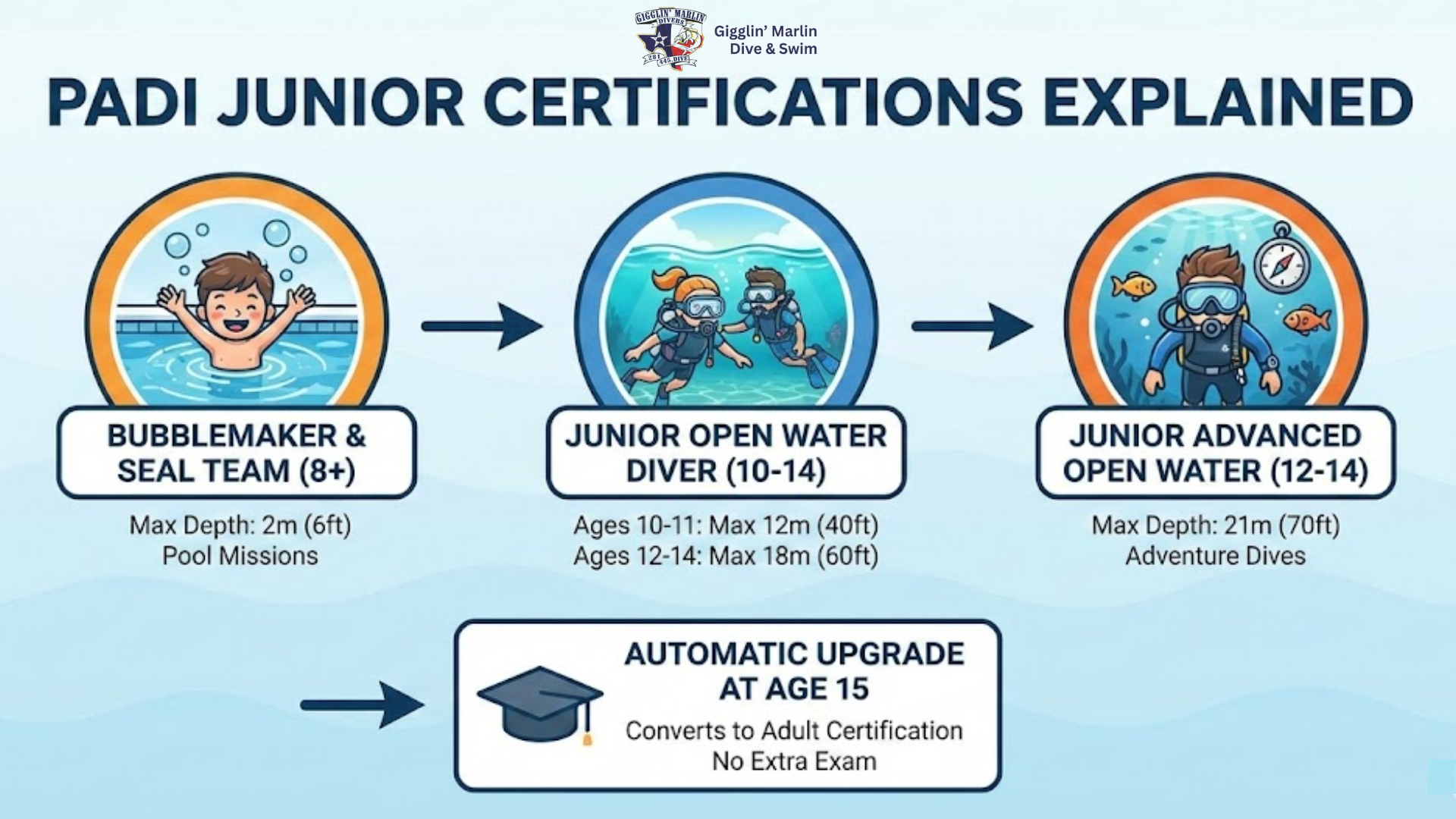
Summary: Parents often explore scuba diving as a structured activity that builds confidence, discipline, and water safety skills. With globally recognized junior programs, children receive age-appropriate training in a controlled environment. Programs aligned with PADI scuba diving course standards introduce young learners to underwater skills while reinforcing safety awareness. When paired with progressive learning and exposure to scuba rescue certification, junior scuba programs deliver both fun and responsibility in equal measure.
Scuba diving attracts curiosity at a young age, especially among children who enjoy swimming and exploration. Parents, on the other hand, want to know about safety, supervision, and credibility first before admitting their child. Junior scuba programs are dealing with these issues in terms of systematic training, licensed training, and rigorous depth and age restrictions. It is a good idea to understand the functionality of the junior certifications, as it would assist families in assessing the feasibility of scuba diving regarding the physical ability of the child, emotional stability, and their interest in the activities involving water in the long term.
Understanding Junior Scuba Diving Programs
Junior underwater programs bring about underwater exploring in a controlled, skill-oriented way. These are programs that are not reflective of adult certifications. They instead modify instructional methodology, depth issues, and oversight expectations towards younger individuals.
Training emphasizes:
- Basic underwater communication.
- Equipment familiarity.
- Breathing control.
- Situational awareness.
Through the organization of lessons into brief, interactive modules, the instructors keep the attention and remind them of safe conduct under the water.
Age Requirements and Certification Pathways
PADI organizes the junior programs in line with the developmental stages.
Programs for Ages 8-9
Children start with activities like Bubblemaker and Seal Team based on the pools. These lessons limit depth and are concerned with comfort, interest, and unpressured basic underwater skills.
Programs for Ages 10-14
At this level, the children can join in the Junior Open Water and advanced junior certifications. These programs are similar to adult certifications in terms of academic foundation but with more rigorous supervision and maximum depth.
This progressive development of young divers prepares them without overwhelming them for the future training.
How Safety Is Built into Junior Scuba Training?
All the junior scuba programs still rely on safety. Certified teachers have small student-to-instructor ratios and adjust the teaching speed to the learning style of students. Children hardly experience strain and discomfort in the water because equipment fits them perfectly.
Problem recognition, which is closely related to scuba rescue certification, is also part of training to teach young divers how to be aware to avoid emergencies. Such an attitude promotes a relaxed decision-making process and an attitude towards safety.
The Role of Certified Instructors and Facilities
The scuba training of juniors heavily depends on the knowledge of the instructors. Skills are then developed based on the assessment of comfort level, swimming ability, and the attention span of every child by certified professionals.
The futuristic facilities provided by the indoor pools have some more benefits:
- Regulated water temperature.
- Predictable conditions.
- Web-based, real-time access to instructors.
These conditions enable the children to train the techniques over and over before going to open water experience through a PADI scuba diving course model.
Physical and Emotional Readiness in Children
Scuba diving does not just need the ability to swim. When children demonstrate:
- Comfort in water.
- Instructional compliance.
- Under new conditions, emotional control.
Instructional programs move forward when teachers notice the preparedness. This would lower the stress and build self-esteem. The experience of organized safety principles associated with scuba rescue certification also underpins emotional maturity and responsibility in the water.
Skill Development Beyond the Pool
Junior training on scuba acquires some transferable skills that are not limited to diving.
Children learn:
- Attention during organized teaching.
- Awareness and communication in a team.
- Responsibility for personal equipment.
These skills reinforce decision-making and leadership inclinations as they progress to higher levels in a PADI scuba diving course and in particular when they are engaged in group dives.
Common Parent Concerns Addressed
Is scuba diving physically demanding for kids?
The focus of training is efficiency and appropriate technique, which will decrease the physical strain of the body.
Does pressure affect young divers differently?
Programs have a low depth and step-by-step advancement.
Is emergency training included?
Age-specific safety enlightenment is based on concepts that relate to the scuba rescue certification process, with emphasis on prevention over response.
Long-Term Benefits of Junior Scuba Certifications
When children are introduced to scuba training at an early age, they tend to build a good base for advanced training in the future. Junior programs promote lifetime water confidence without breaching the safety limits.
A PADI scuba diving course is designed in a way that provides similar standards throughout, and employees are able to train the whole family during travelling or moving without any break.
Conclusion
Junior scuba certifications offer a balanced approach to underwater exploration, blending excitement with structure and safety. When parents understand how programs integrate instructor oversight, progressive learning, and principles aligned with scuba rescue certification, confidence in the process increases. For families considering a trusted PADI scuba diving course, Gigglin’ Marlin Dive & Swim provides certified instruction, controlled facilities, and a supportive learning environment designed specifically for young divers.
Explore junior scuba programs with confidence, connect with Gigglin’ Marlin Dive & Swim to begin your child’s underwater journey.
Frequently Asked Questions
-
Is scuba diving safe for children under 10?
Yes, pool-based programs introduce skills in shallow water under direct supervision.
-
Do junior divers receive real certifications?
The junior certifications are recognized worldwide and are transferred to adult certifications as age goes by.
-
How long does junior scuba training take?
Different programs and comfort levels differ in the amount of time spent, and progress is made when one is ready.
-
Does junior scuba include emergency awareness?
Training emphasizes prevention and awareness inspired by principles used in scuba rescue certification.
-
Where should parents start?
The training should start with a PADI scuba diving course specially made to suit children.
